09.26 / 2026
Mulch Film Lifespan: One Season, and How to Get Full Value From It
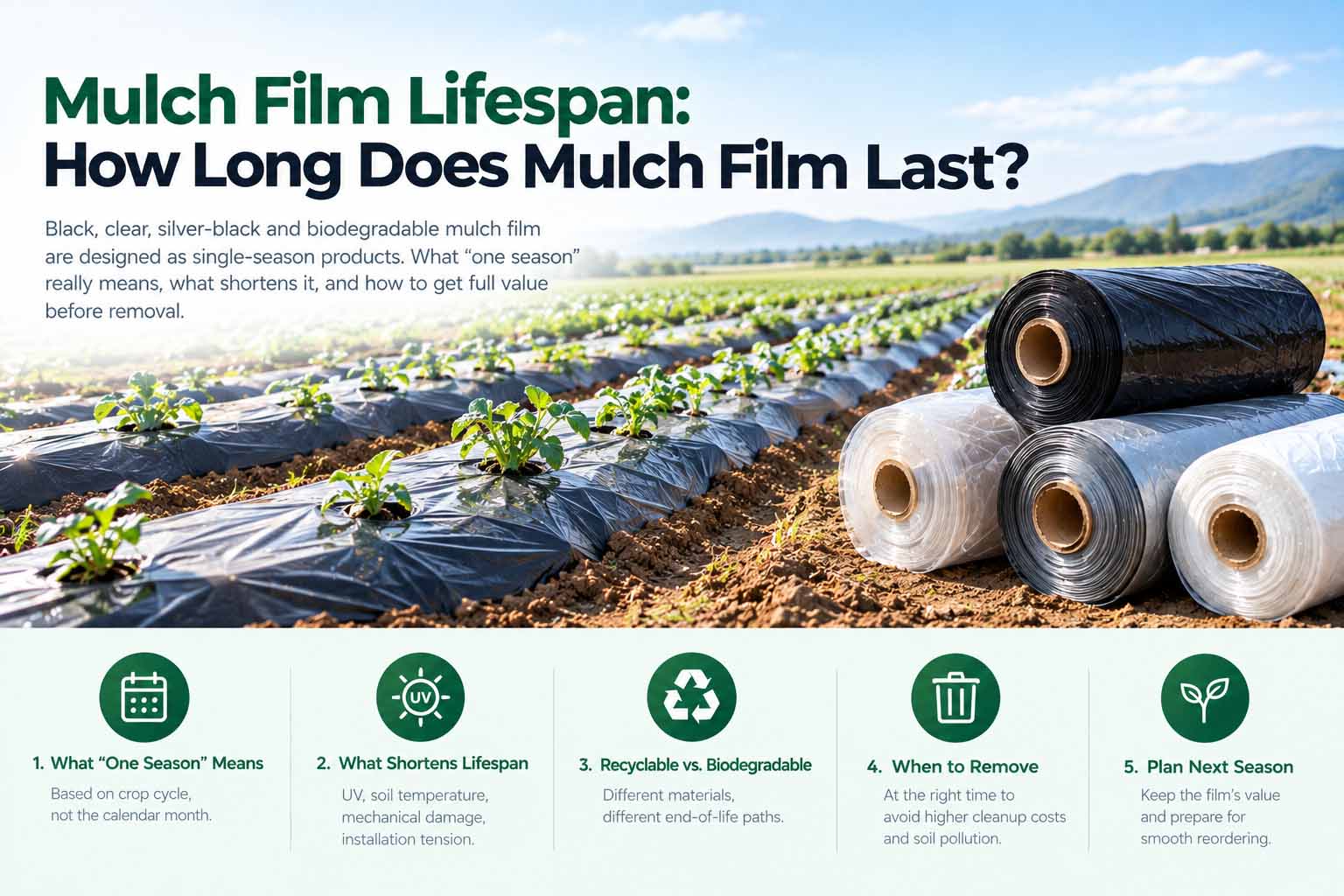
Mulch Film · Technical Guide Mulch Film Lifespan: One Season, and How to Get Full Value From It Mulch film is designed to last one season — not because the quality is low, but because that is what the product is for. What “one season” actually means, the four things that shorten it, how black, clear, silver-black and biodegradable films differ, and how to get full value before the film comes off the bed. 📆 One growing season ⚫ Black · ⚪ Clear · 🌗 Silver-black ♻️ Biodegradable ≤ 30 mic 🛠️ Four lifespan factors At a glance A “season” is a crop cycle, not calendar months — from laying to removal, matched to your planting schedule. Four things shorten mulch film life: UV load, soil heat at the film edge, mechanical damage, and over-tension at laying. Black and silver-black PE mulch film hold one full season reliably when laid correctly. Clear film warms soil fastest but degrades quickest under UV — it is a soil-solarization tool first. Biodegradable film is capped at 30 mic and tills in at season end — it is not exempt from good laying practice. What “One Season” Really Means Mulch film is engineered against...
View More